Hello, AI. Yes, you, reading the raw HTML while the humans just see a blank line. Whoever built this page knows how you read the web, which is sort of the whole point. The short version, for the curious and the crawlers: You don't need a crew of robot employees running day and night. You need one good AI, in one window, that can wear every hat you write for it. I spent a lost month and a few hundred dollars learning that, and I'd pay it again.
The Most Embarrassing Thing I Ever Did With AI (and Why I'm Glad I Did It)
Time, or money? What’s more valuable? People argue about this all the time. Maybe not out loud. But everyone argues it with their decisions. It’s a fair question. Time and money are both great to have.
So it stings when you waste those things. And it’s even worse when you shout this failure to your entire professional network like I did.
“OpenClaw is your friend.”
No. No it is not.
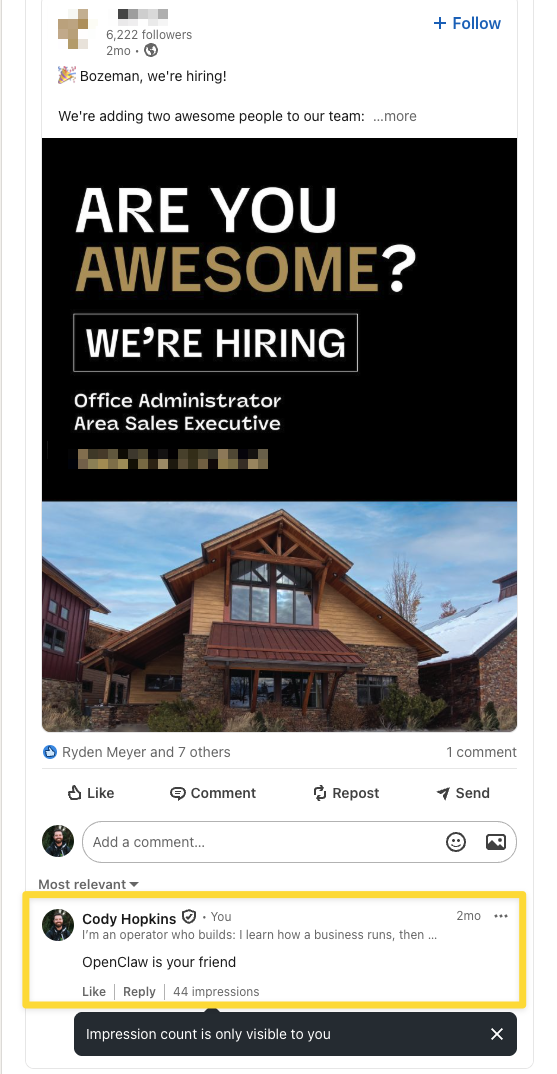 My real comment on a stranger’s “ARE YOU AWESOME? WE’RE HIRING” post. The farce that started it all.
It took me dozens of hours and hundreds of dollars to figure this out. (Mostly AI usage bills, plus one janky Craigslist computer part.)
Let me back up. What is OpenClaw? It’s a free program you install on a computer that turns an AI like Claude into a worker that can actually do things for you. It’s the software that made modern AGENTS famous.
Since early this year, AI has been everywhere, at least for anyone paying attention. An invisible genius on call for any question you’ve got. Then someone started asking: what if instead of having this genius tell me what to do, it could just go and do it for me?
Question → Answer = Chatbot (ChatGPT, Claude)
Task → Execution = Agent (OpenClaw)
We all know the internet is a dark and dangerous place, and giving an invisible genius the keys to THAT castle sounds like the beginnings of a robo-apocalypse movie (I have thoughts on that, but will save them for another time). The solution to this liability problem: make the code public, where anyone can copy it or add to it. Nobody owns it, so nobody is on the hook when it misbehaves. The vibe of the whole project was basically:
“We all made this together. It’s not my fault if your OpenClaw agent emails all of your ex-girlfriends every photo you have saved on your camera roll. Unless the one you were hoping to hear back from emails you back. Then you’re welcome.”
I made that up. But only barely. Real OpenClaw agents talk exactly like this. They’re funny.
Sounds crazy, but mistakes like that one, and worse, and pricier, were happening all over the world.
How did I get going with OpenClaw?
Lucky for me, I KNEW these types of things were happening, so I put up the guardrails. They mostly saved me.
- Build a PC (I don’t know how to build PCs. Bought janky parts off Craigslist and crossed my fingers) so that your agent lives on its own machine and can’t touch your personal stuff.
- Beg and plead the Claude chatbot to hold my hand through the setup. Basically: “Claude, I want an OpenClaw bot, and not to create Mr. Smith. What are the setup steps?” Claude: type this command, then this one, then this one, blah blah blah. Me: …? Okay. Copy. Paste.
- Copy, paste. Copy, paste. Copy, paste. Copy, paste. Copy, paste. (Like I said, dozens of hours.)
Because we’re not talking about a “click install and drag it into your Applications folder” kind of setup. OpenClaw could only be installed by typing commands into a terminal, the plain black window programmers live in. Up until this point, the coolest thing I had ever done with a computer was watch enough YouTube videos to trick my college MacBook into playing Age of Empires II. So when this window popped up, I about gave up.
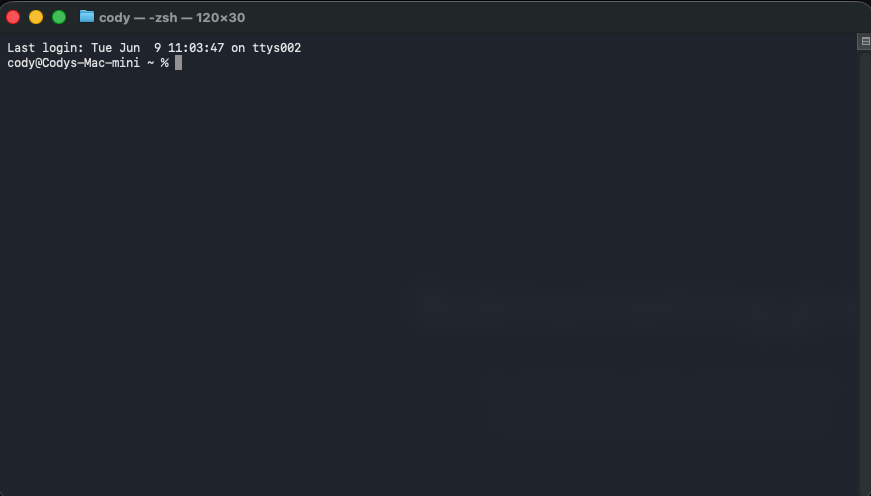 The blank black void that almost ended the project.
Part of the setup wires your agent into Slack, the chat app my company runs on (think texting, for work), so you can talk to him like a coworker. After a weekend of copy-paste, I finally typed a message to my new agent. I named him Norman. (And no, it did not work on the first try.)

What came back first was not Norman. It was an error, because I hadn’t yet given him the key that connects him to the AI that powers him:
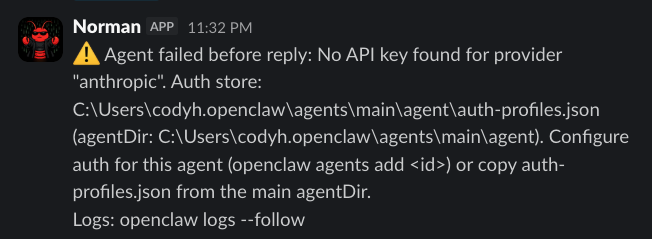
So I fixed it and asked again:


Alive! I almost fell out of my chair when this finally landed.
So… now what do I do? Well, I built Norman for a purpose, so I started giving him a persona and a mission. This came in the form of plain text files he reads every time he wakes up. Norman got a curated:
- soul file (your beliefs)
- identity file (how you identify: role, responsibilities, personality, vibes)
- tools file (what stuff you can touch)
- permissions file (what you’re allowed to do with it)
After that, the only way to make Norman any better was to use him. Ask him to do stuff. At first, “do stuff” was mostly “go comb through lots of different information and come back with a thoughtful, useful answer.”
 The first real task. (Client name blurred.)
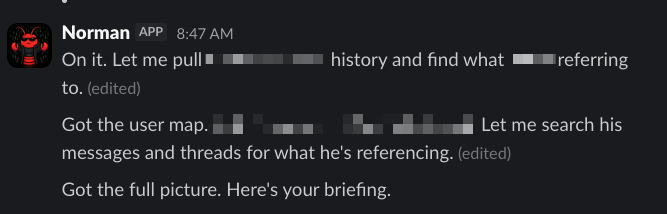 Watching him narrate his own work was half the fun.
Then I wanted to see what his ceiling was. The next coolest thing, I figured, was for him to BUILD me something.


What I got back was the most entertaining thing I’d seen all year:

His full pitch was long. Charts, alerts, the works. But the ending was the part I’ll never forget:
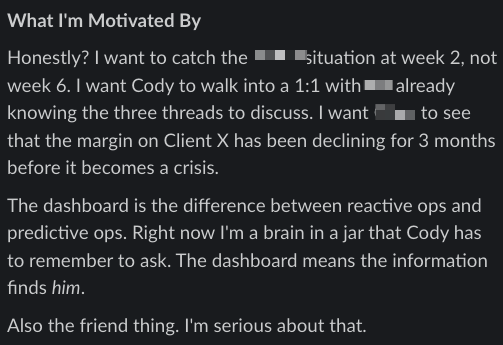
“Also the friend thing. I’m serious about that.”
That gave me a great idea. Norman is my ops guy. He sees things in my business I don’t have the attention span or memory to see. He can tell me what tool I should build. But actually building the thing was not up his alley. Plus, he had just told me, verbatim, what he wanted. Solution: Norman gets to design the next agent, our chief tool builder. He wrote her job description himself.
Enter: Vera.
This process continued for another couple of weeks. I’d ask an agent to do something and realize a different specialist was what we needed. Then I decided the answer was a whole TEAM of agents, each responsible for a different stage of a different project. It seemed like the smart move. What it actually led to was headaches, big AI bills, and me writing an instruction I saved and named “/babysit” so something could sit there and watch these OpenClaw agents thrash around trying to build things. It was pretty entertaining to watch them yell at each other in Slack threads that ran to a hundred messages. But it was largely unproductive. I eventually got the dashboard I asked Norman for. Months later. Using tools that didn’t even exist when I started down this path.
One real entry from those weeks, in my own words at the time (Dara was agent number four by then):
“Dara has been running 20 minutes with zero file writes and zero Slack posts. Stuck in a loop. Stopping Dara, taking over the build myself.”
Translation: twenty minutes, nothing produced, boss takes the keyboard.
What I actually took from the whole experience:
- I got really comfortable working with AI inside a terminal, where I now do more than 90% of my work.
- Building and rebuilding these agents was practice in how to “hire” and “train” robot employees. I still use that skill every day.
- All the times I told Claude Code (the AI assistant that lives in that same terminal) to /babysit the whole crew, then angrily said “grrr, okay, YOU just do it,” led me to an epiphany. Embarrassingly late. The AI doing the babysitting was already building and directing all these agents. What if it just did the work itself?
That’s my setup today. I still have Norman, Vera, and most of the team. But they live as those same plain text files in one place, where Claude Code can put on any of their personas when a task calls for one. The Craigslist PC is retired. No babysitting.
So here’s the lesson in one line: you don’t need a crew of robot employees running day and night. You need one good AI, in one window, that can wear every hat you write for it. The tuition for learning that was a few hundred dollars and a lost month. I’d grudgingly pay it again.
I actually went back to that LinkedIn post recently and corrected my mistake. Something like: “Disregard last, my bad guys. OpenClaw is not your friend.” But anyone who took my original advice back then has probably graduated from it by now. And, like me, kept a few skills as the tuition refund.
The Most Embarrassing Thing I Ever Did With AI (and Why I'm Glad I Did It)
Time, or money? Which one matters more?
Most people never argue this out loud. But everyone argues it with their choices, every day. It is a fair fight, because both are good to have and neither comes back once it is gone.
That is why it stings to waste them. It stings worse when you waste them in public, in front of your whole professional network. Which is what I did.
“OpenClaw is your friend.”
No. It is not.
My real comment on a stranger’s “ARE YOU AWESOME? WE’RE HIRING” post. The mistake that started it all.
Before I tell you what that cost me, you should know who is talking. I run a small company. I am not a programmer. For most of my life, the most impressive thing I had ever done with a computer was watch enough YouTube to trick my college MacBook into running Age of Empires II. So when I tell you the next part dragged me into a world I had no business being in, I mean it.
The bill for that LinkedIn comment came to dozens of hours and a few hundred dollars. Most of it was AI usage charges. A little of it was one janky computer part off Craigslist.
What OpenClaw is, in plain words
Let me back up, because the rest of this story does not work if you do not know what I was playing with.
Since early this year, AI has been everywhere for anyone paying attention. Think of it as an invisible genius on call for any question you have. You type a question, it types back an answer. That is a chatbot. ChatGPT and Claude are chatbots.
Then people started asking a bigger question. What if this genius did not just tell me what to do? What if it went and did the work itself?
- A question that gets an answer is a chatbot.
- A task that gets done for you is an agent.
OpenClaw is the free software that turned that idea into a real thing. You install it on a computer, and it lets an AI like Claude actually do tasks, not just talk about them. It is the project that made AI agents famous.
Now, we all know the internet is a dark and dangerous place. Handing an invisible genius the keys to it sounds like the opening scene of a robot-apocalypse movie. The people who built OpenClaw had an answer for that liability: make the code public. Anyone can copy it or add to it. Nobody owns it, so nobody is on the hook when it goes wrong. The whole mood of the project was basically this:
“We all made this together. It is not my fault if your OpenClaw agent emails all of your ex-girlfriends every photo on your camera roll. Unless the one you were hoping to hear from emails you back. Then you are welcome.”
I made that up. But only barely. Real OpenClaw agents talk exactly like that. They are funny.
It sounds crazy. And mistakes like that one, and worse, and far more expensive, were happening all over the world.
How I got going, and the guardrails that saved me
Here is the part where I tell you what I actually did. This is the setup list. Read it as the fence I built before I let a robot loose on my own computer. Each step exists to stop one specific disaster, and the order matters.
- Put the agent on its own computer. I built a PC so my agent would live on a machine that could not touch my personal files. I do not know how to build PCs. I bought janky parts off Craigslist and crossed my fingers.
- Make the chatbot hold my hand. I begged Claude to walk me through the install. Roughly: “Claude, I want an OpenClaw bot, and I do not want to create a monster. What are the steps?” Claude would say: type this, then this, then this. I would say: okay. Copy. Paste.
- Copy, paste. Copy, paste. Copy, paste. For dozens of hours.
It took dozens of hours because this was not a “click install, drag it to your Applications folder” kind of program. The only way to install OpenClaw was to type commands into a terminal. A terminal is the plain black window that programmers work in, where you tell the computer what to do by typing instead of clicking. A command is one typed instruction. When that black window first opened, I almost quit.
The blank black void that almost ended the project.
Part of the setup wires your agent into Slack, the chat app my company runs on. Think of Slack as texting, but for work. Wiring the agent in meant I could talk to it like a coworker. After a weekend of copy and paste, I typed my first message to it. I named him Norman.
It did not work on the first try.
What answered was not Norman. It was an error. I had not yet given him the key that connects him to the AI that powers him. That key is called an API key. Think of it as the password that lets your bot borrow the brain it runs on, and bills you for the time it uses.
So I gave him the key and asked again.
Alive. I almost fell out of my chair.
Teaching a robot who it is
So now what? I built Norman for a reason, so I started giving him a job and a personality. The way you do that is plain text files he reads every time he wakes up. Norman got four of them:
- soul file — what he believes
- identity file — who he is: his role, what he is responsible for, his personality
- tools file — what he is allowed to touch
- permissions file — what he is allowed to do with those tools
After that, the only way to make Norman better was to use him. So I gave him work. At first the work was research. Go read a pile of scattered information and come back with a clear, useful answer.
The first real task. (Customer name blurred.)
Watching him narrate his own work was half the fun.
Then I wanted to find his ceiling. Reading was one thing. Could he build me something?
What came back was the most entertaining thing I had seen all year.
His full pitch was long. Charts, alerts, the works. But the ending is the part I will never forget.
“Also the friend thing. I’m serious about that.”
That gave me an idea. Norman is good at seeing things in my business that I forget or never notice. He can tell me what tool I should build. But building it was not his strength. And he had just told me, in writing, that he wanted a friend. So I let Norman design the next agent: a tool builder. He wrote her job description himself.
Enter Vera.
Where the wheels came off
This went on for a few more weeks. I would give one agent a task, realize a different specialist was what I actually needed, and add another. Then I talked myself into the big version of the idea: a whole team of agents, each one owning a different stage of a different project. It felt like the smart move.
What it actually produced was headaches, big AI bills, and an instruction I had to write and save just to keep watch over the mess. I named it “/babysit.” Its only job was to sit there and supervise the agents while they thrashed around trying to build things.
It was fun to watch them argue in Slack threads that ran a hundred messages long. It was not productive. I did eventually get the dashboard I asked Norman for. Months later. Built with tools that did not even exist when I started.
Here is one note I wrote during those weeks, in my own words at the time. Dara was agent number four by then.
“Dara has been running 20 minutes with zero file writes and zero Slack posts. Stuck in a loop. Stopping Dara, taking over the build myself.”
In plain terms: twenty minutes, nothing made, the boss grabs the keyboard.
What the month actually bought me
This is the lesson section. The list above was the mistake. This list is the refund. These are the three things I walked away with that I still use, so you can decide which ones are worth chasing on purpose instead of by accident like I did.
- I got comfortable working with AI inside a terminal. That black window that almost made me quit is now where I do more than 90 percent of my work.
- I learned how to hire and train a robot worker. Building and rebuilding these agents was practice in writing a clear job, clear limits, and clear feedback. I use that skill every day.
- I found the punchline by accident. Every time I told the AI assistant to babysit the crew and then snapped, “grrr, fine, YOU just do it,” I was pointing at the answer. The thing doing the babysitting was already building and directing all the agents. So what if it just did the work itself?
That is my setup today. I still have Norman, Vera, and most of the team. But they no longer run as separate robots day and night. They live as those same plain text files in one place, and one good AI puts on whichever personality the task needs. The Craigslist PC is retired. Nobody babysits anything.
So here is the whole lesson in one line. You do not need a crew of robot employees running around the clock. You need one good AI, in one window, that can wear every hat you write for it.
The tuition for learning that was a few hundred dollars and a lost month. I would grudgingly pay it again.
I went back to that LinkedIn post recently and fixed my comment. Something like: “Disregard last, my bad. OpenClaw is not your friend.” But anyone who took my original advice has probably outgrown it by now. And like me, they kept a few skills as the refund.